
How AI Is Changing Game Development: Studio Quality at a Fraction of the Cost
AI lets small teams build games that used to need a full studio, at a fraction of the time and cost. Here is how we did it with Ultra War and Recipe For Disaster.
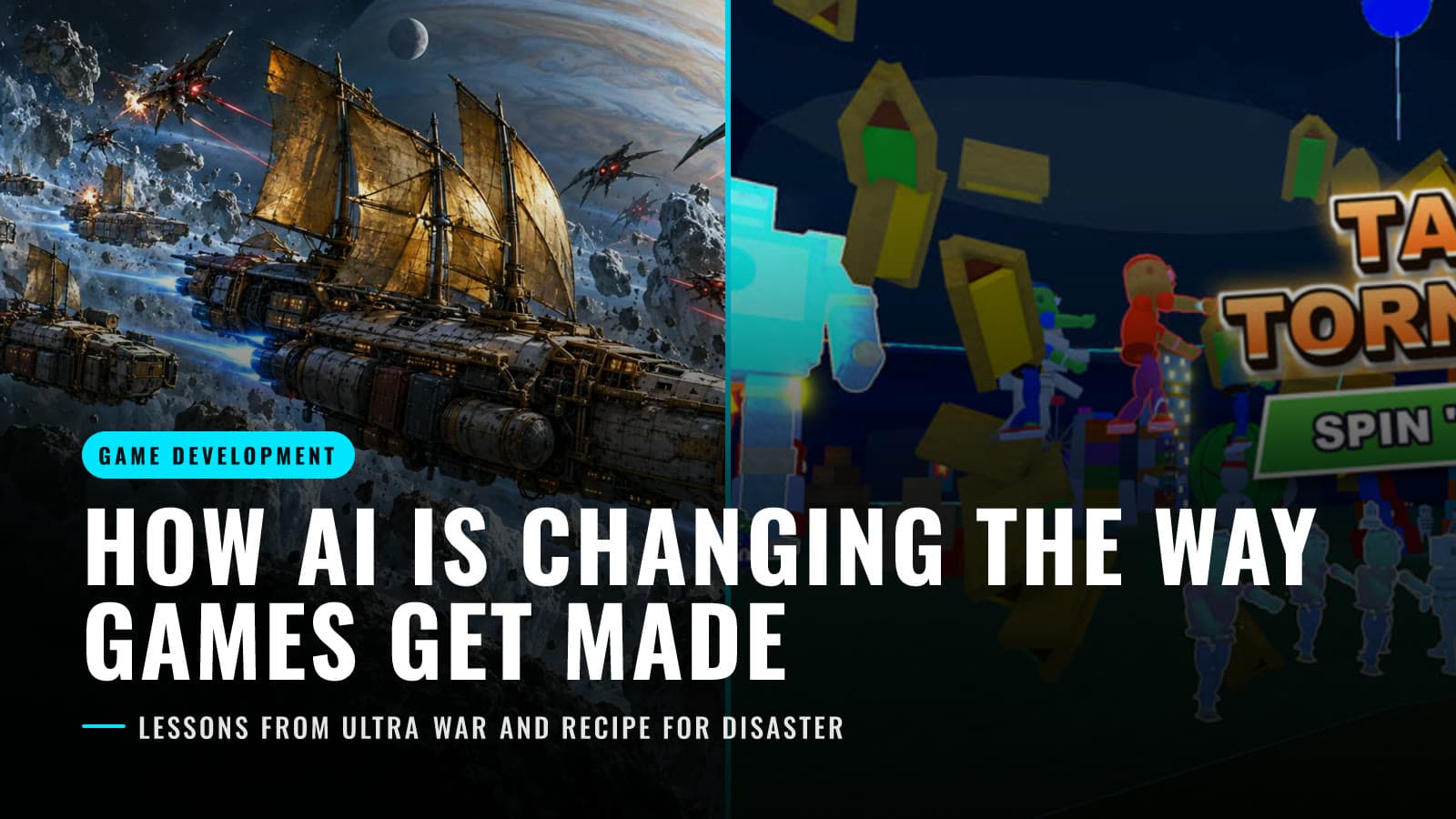
For most of gaming history, ambition had a price tag. A 3D strategy game with eight factions, hundreds of star systems and a fleet of warships meant a studio, years of work and millions of dollars. A polished multiplayer game with 17 animated bosses meant a team of programmers, artists and animators. Small teams either shrank their ideas down to fit or never started.
AI is changing that math. Games that used to be too big for a small team, or that simply did not make economic sense to build, are now within reach of a handful of people. The quality bar has not dropped. The cost has. We can make genuinely high quality things in a fraction of the time and for a fraction of the money it used to take.
We know because we are doing it. Ultra Labs ships two very different games today. Ultra War is a galactic 4X strategy game that runs in your browser, with card battles, colonies, a persistent galactic war and a Flagship you fly in full 3D. Recipe For Disaster is a chaotic, food-themed shooter on Roblox for players of all ages. Both were built by a very small team working alongside AI. Here is what that actually looks like, what AI is good at, and where people still matter most.
The big shift: AI as the build crew
The biggest change is that a single developer with a clear vision can now direct a crew of AI helpers, each doing the job it is best at.
- Code. Coding models like Claude can hold a whole project in view, write systems end to end, run the tests and fix what breaks. A game is mostly code under the hood, so this is where the time savings are largest.
- Concept art. Image models turn a written description into a dozen visual directions in minutes, so you can pick a look before anyone spends a week on it.
- 3D models. AI agents can now work in tools like Blender and hand back game-ready models built to a spec.
- Testing and quality. AI can read logs, run test suites, review screenshots and triage bug reports from players.
- Live features. Small, fast decision models can run inside the game itself, judging player text or picking between options the game already allows.
None of these replace the person deciding what the game should be. What they replace is the headcount and the budget that used to stand between a good idea and a finished game.
Recipe For Disaster: a Roblox game, built mostly by AI
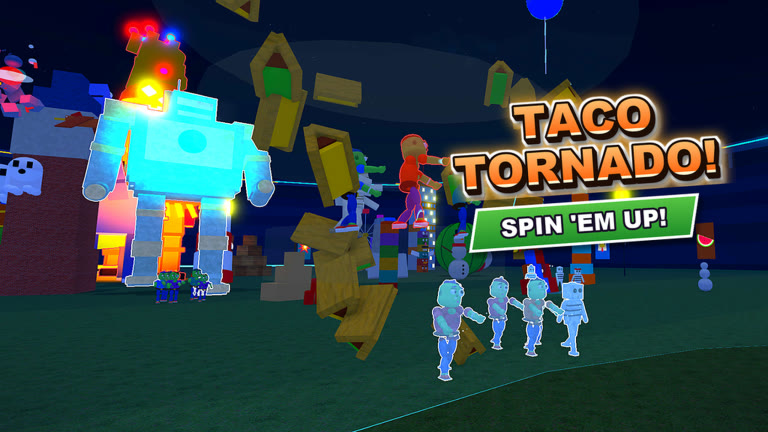
Recipe For Disaster is the clearest example we have. The project started on October 22, 2026, and it was live on Roblox five days later, with 17 bosses, an upgrade system, boss drops, combos, achievements and multiplayer.
Most of it was built by Claude, Anthropic's AI model. Our founder set the vision, made the calls on design and feel, and playtested every section. Claude wrote the game: the scripts, the map builders, the enemy animations, the save system, the economy and the tests that check it all. The work ran through about 160 commits in those five days.
A few things made that pace possible:
- Claude works directly in Roblox Studio. Roblox Studio now supports the Model Context Protocol, a standard way for AI tools to connect to other software. That let Claude sync code into Studio, run it and read the results without anyone copying and pasting.
- The code lives on disk, not inside the game file. Every script and map is a plain file that can be checked, tested and versioned before it ever reaches Studio. That keeps an AI-built project as reviewable as a hand-built one.
- One section at a time. The game was built in small pieces from a to-do board. Build a piece, playtest it, write down what changed, commit it, move on.
We are also actively experimenting and iterating with multi-agent creation, where AI systems from different companies each take on a piece of the work, such as 3D modeling, and hand it back and forth, with our founder reviewing every step.
Roblox itself is moving the same way. Its built-in Studio Assistant can now plan, generate meshes and playtest, building on Cube, the open-source 3D model Roblox released in 2025. Small creators on Roblox are about to get a lot more capable.
Ultra War: a bigger game with a bigger crew
Ultra War is a much larger project, and it uses more kinds of AI, each with a clear job.
- Claude does the engineering: game systems, releases, reviews and design documents. It coordinates teams of AI agents working in parallel, which is how Ultra War can ship a dozen releases in a single day during early access.
- OpenAI's image model renders concept art for ships, loading screens and tokens. Our founder approves every concept before it becomes a 3D model or goes in the game.
- Jev, a fast decision model from TypeSafe, runs inside the live game. It helps the game understand the free text players type when they hail other ships, and it checks our own writing against the game's style rules after each release.
- Grok gives independent design reviews, because a second model catches things the first one misses.

Ultra War also runs on a few firm rules that we think every team using AI in a game should copy:
- Code proposes, a model decides, code acts. When AI runs inside the game, it only picks from options the game has already checked. No model can create currency, hand out rewards or ban a player on its own.
- Keys stay on the server. API keys never ship to players.
- Send as little player data as possible. A model gets the text it needs for the task and nothing else.
- Every live AI feature has an off switch and a plain fallback for when the model is slow or down.
- Measure before trusting. Each AI job gets a test set and a pass mark, so swapping one model for another is a decision made on numbers.
What AI does not do
It does not decide what is fun. AI can build a boss in an afternoon, but someone still has to play it and say "that is too easy" or "make him bigger and louder." It does not know your players, your community or why your game exists. And it does not take responsibility. A person approves the art, signs off on releases and answers to the players.
The best results we have seen come from treating AI like a talented, tireless crew that needs a clear brief and an honest review. When we describe the outcome we want and ask the model how it would get there, the work is usually better than when we dictate every step.
Developers are divided, and that is fair
Not everyone in the industry is excited. In the 2026 GDC State of the Game Industry report, 36% of game professionals said they use generative AI in their work, and 52% said it is having a negative impact on the industry, up from 30% the year before. Artists, designers and programmers were the most worried.
We take that seriously. Our view is that AI is at its best when it lets small teams build things that would never exist otherwise, and at its worst when it is used to cut corners on craft. Recipe For Disaster would not have been made by a studio. It exists because one person with an idea could direct an AI crew to build it in a week. That is a new kind of game developer, and we think there will be a lot more of them.
If you want to build a game with AI
- Start small and ship. A tight, finished game teaches you more than a huge unfinished one.
- Keep your project in plain files under version control, even on platforms like Roblox, so AI work can be reviewed and rolled back.
- Give each AI one clear job and write down what it is and is not allowed to do.
- Write your quality bar down. Models are great at hitting a standard once you define it.
- Playtest everything yourself. Fun is still a human call.
Play them, then tell us what you think
Both games are free. Play Ultra War in your browser and play Recipe For Disaster on Roblox, then come tell us what you think in our Discord.
If your business or organization wants to put AI to work the same way, with clear jobs, firm guardrails and real results, that is what Ultra Labs AI Consulting does.